Keep one comparison and one search in this browser. Nothing is saved until you choose Save. Saving again replaces that item. No account, syncing or offline pages; private browsing or clearing site data may remove it.
Nothing saved yet. Select candidates, or set filters in the shrine finder, then save here.
Compare the visit scope, transport notes and prayer traditions of the shrines currently listed here. This is a selected guide, not a complete regional directory.
Compare all three Kumano Sanzan shrines: Hongu for wooden halls and a stair approach, Hayatama for a shorter town visit in Shingu, and Nachi for hillside worship with waterfall scenery nearby. Oyunohara, Kamikura, Nachi Falls and Kumano Kodo walks need extra time. The shrines are separate destinations with substantial transport between them.
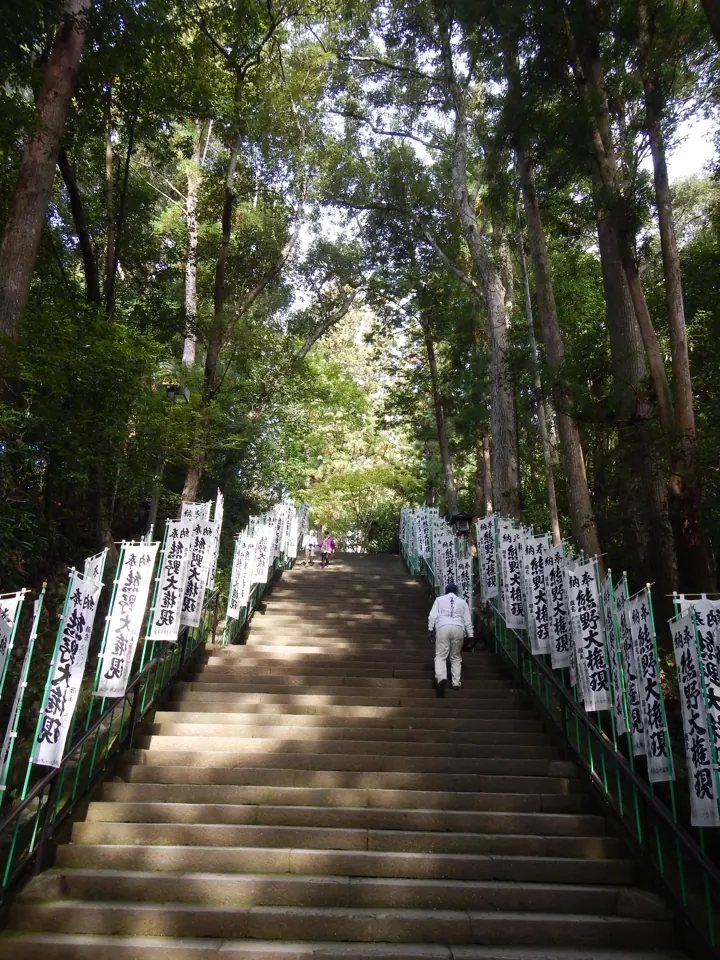
Cypress-bark-roofed wooden sanctuaries · 158-step approach through trees · Yatagarasu, the three-legged crow of Kumano tradition
Estimated visit
30–60 min
The present main shrine and stair approach only. Add time for Oyunohara, exhibitions or any Kumano Kodo walk; transport and queues are excluded.
Getting there
Take a bus from JR Shingu or Kii-Tanabe Station to Hongu Taisha-mae, then walk to the shrine approach. The prefectural guide gives about 6 minutes from the stop. Check the current timetable and return service; this is not a short transfer from the railway.
Address & enshrined kami
Hongu, Hongu-cho, Tanabe, Wakayama
Ketsumimiko no Okami (associated with Susanoo no Mikoto)
Vermilion halls in a mountain setting · Yatagarasu, the three-legged crow associated with guidance · The large camphor tree in the precinct
Estimated visit
45–75 min
Walking from Nachisan bus stop to the main shrine, worship and the return walk. Excludes the bus ride, Daimonzaka pilgrimage walk, formal prayers, paid facilities, Seigantoji and Nachi Falls.
Getting there
From JR Kii-Katsuura Station, take a Kumano Gobo Nankai bus to Nachisan, about 30 minutes according to the official guide, then walk uphill to the shrine. The usual approach has stone steps. The official FAQ describes a parking-and-lift route for wheelchair users at the main shrine; confirm arrangements before travel.